We are interested in how and why bacteria interact with other cells. Below a few examples of our recent work:
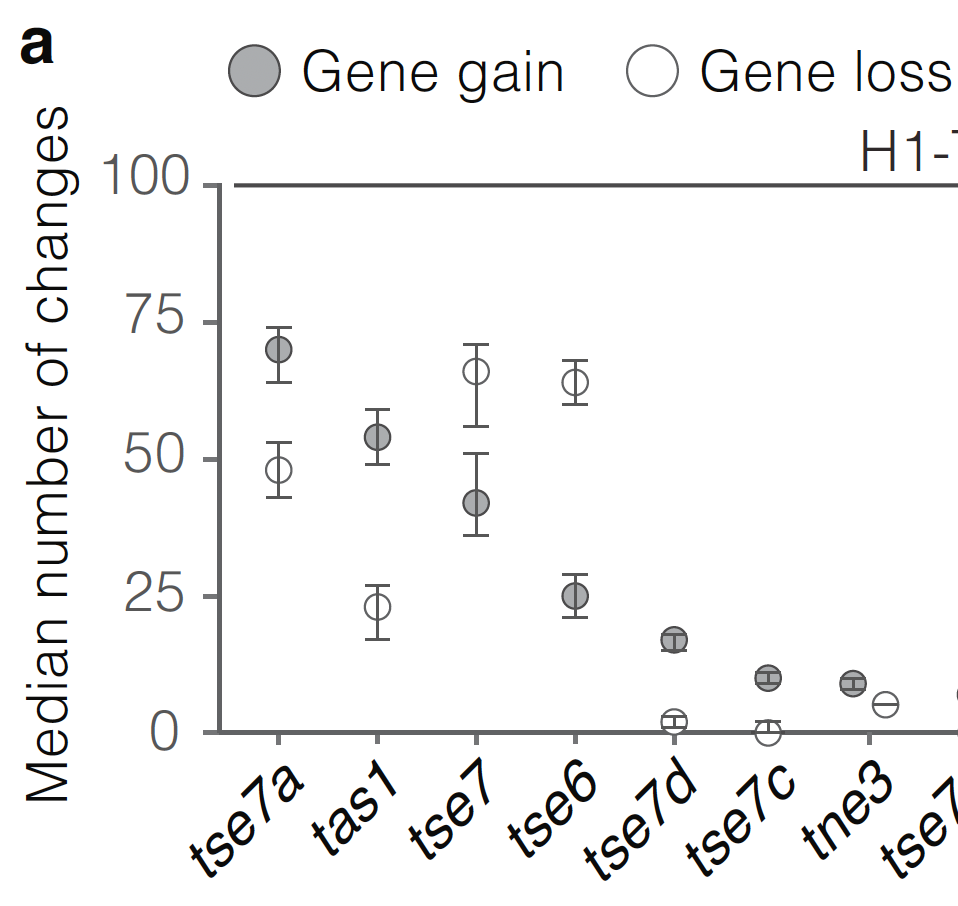
What is the recent evolutionary history
of the T6SSs in P. aeruginosa?
with Antonia and Verónica
We reconstructed the T6SS apparatus and effector genes in the most recent common ancestor of the P. aeruginosa species and found that some genes are gained or lost more frequently than others. These results help explain the tremendous diversity in T6SS apparatus and effector genes between strains. [more here]
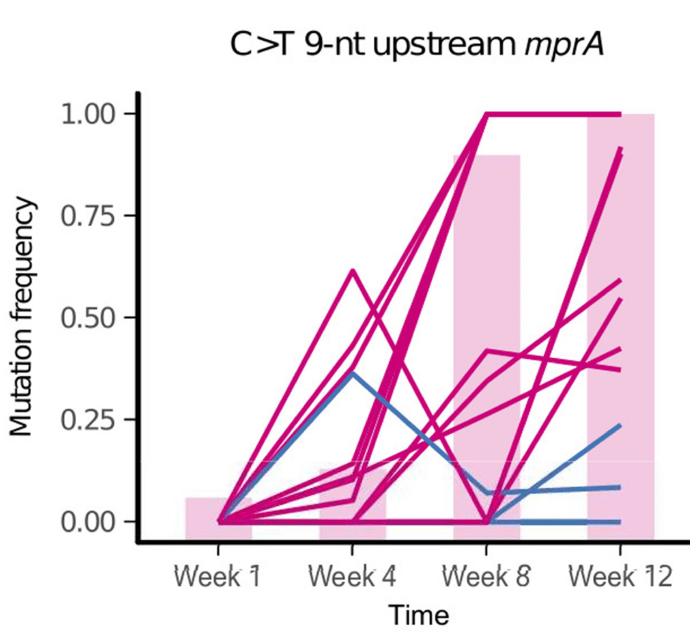
How can bacterial evolution help us to understand multi-factorial diseases and inform novel treatment approaches?
with Nadia, Rahul, and John
We performed an evolution experiment and found that bacteria adapt to an inflamed environment. This adaptation comes along with increased susceptibility towards antibiotics and might pave the way for novel future therapies and Evolutionary Medicine. [more here and here]

How do naturally coexisting bacteria of the microbiota affect each other?
with Hanna, Gabija, and Rahul
We isolated formerly coexisting Bacteroides strains from the murine intestine and observed that they affect each other’s growth positively or negatively under laboratory conditions. These results show the potential for interactions between closely related bacteria in host-associated microbial communities. [more]
Which bacteria live in the intestine?
with Hanna and Rahul
We experimentally characterized two isolates of the recently discovered bacterial species Bacteroides muris. The bacteria had been isolated from the intestinal microbiota of wild-derived house mice and provide insights into microbes that are exclusively host-associated. [more]
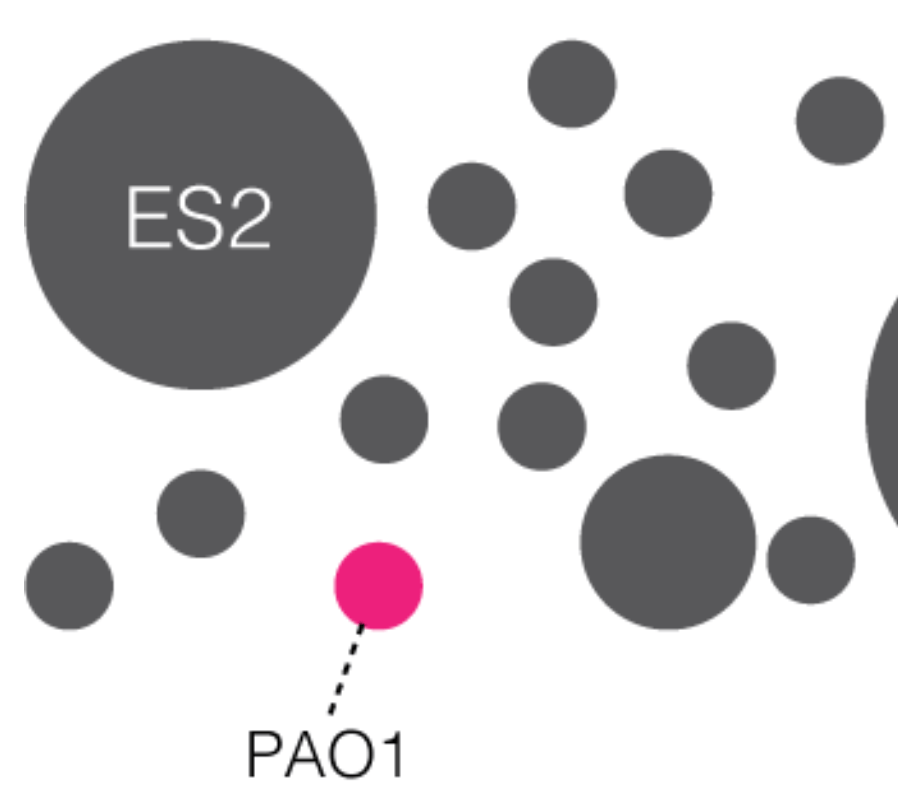
How do P. aeruginosa isolates
differ in their T6SS effectors?
with Antonia, Alibek, and Verónica
We found tremendous diversity in T6SS effector sets of clinical P. aeruginosa isolates. Interestingly, some effectors vary between strains whereas others do not. Most of the isolates differ in their effector set from laboratory reference strains, calling for more research on diverse isolates. [more]
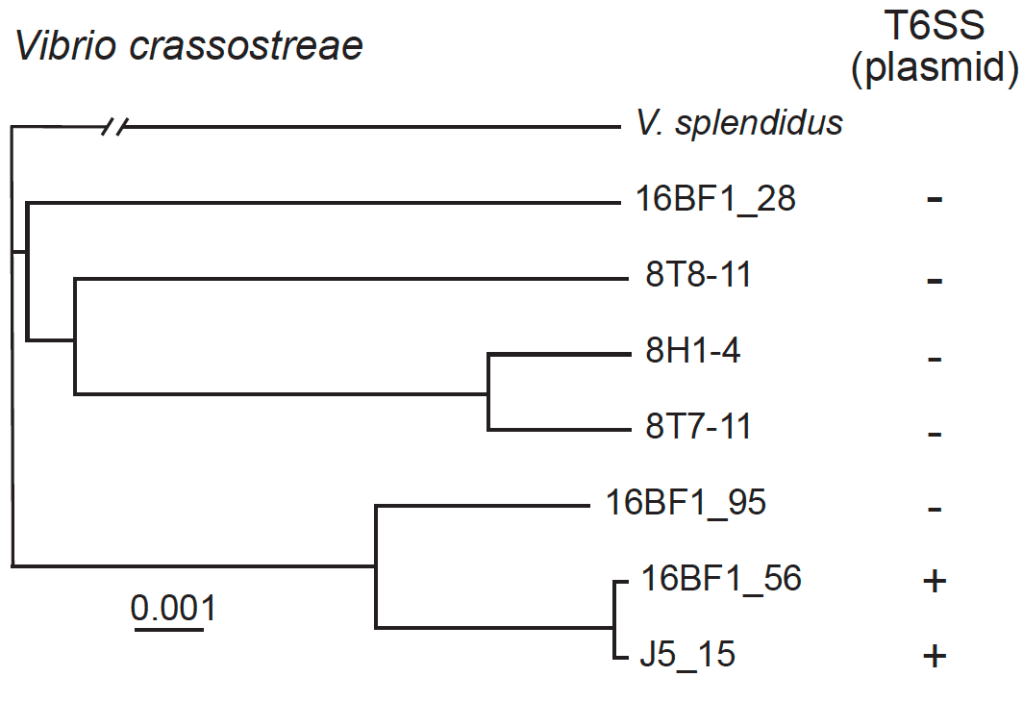
Who has a type VI secretion system?
with Rahul
We summarized the existing literature on bacteria with and without the secretion system. Knowing about the presence/absence variation helps us understand who benefits from the system and who does not. [more]
 Unterweger Lab